
合理的な疑いを超えて

.jpeg)


Language


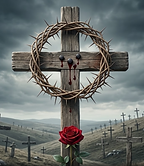


21 Steps to Salvation


1. Hear the True Gospel
The first step of the build is listening to the unfiltered, original message of God.
“From that time Yeshua began to preach and to say, ‘Repent, for the kingdom of heaven is at hand.’” — Matthew 4:17 “And you shall know the truth, and the truth shall make you free.” — John 8:32
-
What this means: You cannot build a straight wall if you are reading a warped blueprint. Hearing the true Gospel means listening to the actual Word of God—not human traditions, clever shortcuts, or watered-down messages that just make people feel good in the pew. It is the moment you hear the real standard for the very first time.
2. Believe the True Gospel
True belief is not just agreeing with facts; it is placing your absolute confidence and weight on the message.
“But without faith it is impossible to please Him, for he who comes to God must believe that He is, and that He is a rewarder of those who diligently seek Him.” — Hebrews 11:6
-
What this means: Believing means you look at the plumb line and say, "That string is perfectly straight, and I trust it completely." It is an inner conviction that drives you to action. If you don't truly believe the blueprint is accurate, you will never bother to change how you are laying your bricks.
3. Repent of Past Sins
Repentance is a deliberate, U-turn in direction. It means stopping your lawlessness and turning back toward the Law of God.
“I tell you, no; but unless you repent you will all likewise perish.” — Luke 13:3
-
What this means: Since 1 John 3:4 tells us that sin is breaking God's law, your old wall was naturally leaning and crooked. Repentance is the moment you drop your tools, admit your wall is out of line, and make a firm decision to tear down the old, lawless way of living so you can rebuild it straight.
4. Confess Faith in Yeshua Messiah
Confession is the public declaration of who is in charge of your building site.
“For with the heart one believes unto righteousness, and with the mouth confession is made unto salvation.” — Romans 10:10
-
What this means: Confession is nailing your colors to the mast. It means standing up and declaring out loud to the world, to the adversary, and to the assembly: "Yeshua is my Master, and I am building my life on His foundation from this day forward."
5. Be Baptized
Baptism is the physical and spiritual washing away of the rubble from your old life.
“Then Peter said to them, ‘Repent, and let every one of you be baptized in the name of Yeshua Messiah for the remission of sins; and you shall receive the gift of the Holy Spirit.’” — Acts 2:38
-
What this means: Going under the water is the formal burial of the old, crooked structure. You don't build a new house on top of old trash. You clear the lot. Baptism washes away the stain of past lawlessness so you can step out of the water onto a clean, solid foundation.
6. Be Faithful Unto Death
Loyalty to the Creator must be absolute, even when the pressure of the world threatens to break you.
“Be faithful until death, and I will give you the crown of life.” — Revelation 2:10
-
What this means: This is the ultimate test of the structure. When the storms of persecution, sickness, or trials hit the wall, a true believer refuses to let a single brick slip. It means your loyalty to the Master Builder stays intact even if holding the line costs you your physical life.
7. Obey Him for Eternal Salvation
The author of salvation specifically identifies who His work is for: those who follow His instructions.
“And having been perfected, He became the author of eternal salvation to all who obey Him.” — Hebrews 5:9
-
What this means: The Master Builder only claims ownership of the walls that actually followed His blueprints. Faith that refuses to obey is an illusion. Salvation belongs to the people who don't just call Him "Lord," but who actually submit to His authority and do what He asks.
8. Live Exactly as Yeshua Did
The Messiah's walk on this earth is the ultimate, flawless example for our daily lives.
“He who says he abides in Him ought himself also to walk just as He walked.” — 1 John 2:6
-
What this means: Yeshua is the living plumb line. If you want to know how to treat people, how to handle temptation, or how to keep God's commands, you look at His life. If a custom or a lifestyle choice doesn't square up with how Yeshua walked, it does not belong in your wall.
9. Do What the Word Says, Don't Just Listen
True faith is an active, hands-on construction project, not a spectator sport.
“But be doers of the word, and not hearers only, deceiving yourselves.” — James 1:22
-
What this means: Sitting in a pew and nodding along with a sermon doesn't build anything. If you know what the Bible says but don't practice it on Monday morning, you are fooling yourself. True faith requires you to pick up the trowel and actually lay the bricks according to the instructions.
10. Possess the Spirit of Christ
True conversion requires the supernatural presence of the Holy Spirit living inside you.
“Now if anyone does not have the Spirit of Christ, he is not His.” — Romans 8:9
-
What this means: The Holy Spirit is the gravity that keeps the plumb line straight. Without the Spirit living inside your heart, you have no power to keep the wall in line, and you don't belong to the Owner of the house. You must have His seal on the inside.
11. Receive the Holy Spirit Through Obedience
God places His Spirit inside those who have a heart bent toward submission.
“And we are His witnesses of these things, and so also is the Holy Spirit whom God has given to those who obey Him.” — Acts 5:32
-
What this means: God does not pour His Holy Spirit into a vessel that intends to stay rebellious and lawless. The Spirit is given as a helper to help you keep the Law. When you step out in willingness to obey, God anchors His supernatural strength deep inside your life.
12. Call on the Name of Yeshua Messiah
Deliverance and strength come from actively crying out to the authority and identity of the Son.
“For ‘whoever calls on the name of the Lord shall be saved.’” — Romans 10:13
-
What this means: When the wall is leaning, when your own strength fails, or when the enemy attacks, you don't rely on yourself. You call on the name and the legal authority of Yeshua. It is an active cry for help to the only One who has the power to hold the structure together.
13. Keep the Commandments to Enter Into Life
When asked directly how to inherit eternal life, the Messiah pointed straight back to God's boundaries.
“Jesus said to him... ‘If you want to enter into life, keep the commandments.’” — Matthew 19:17
-
What this means: Commandments are not heavy burdens; they are the side-guards that keep the wall from warping. Since sin is breaking the law, keeping the commandments is how we show we love God and want our lives to stay completely square with His righteousness.
14. Trust the Son to Not Perish
Escape from the penalty of lawlessness requires absolute reliance on the sacrifice of the Messiah.
“That whosoever believeth in him should not perish, but have eternal life.” — John 3:15,16
-
What this means: No matter how hard we try to build straight, our past sins would condemn us if not for Jesus. Trusting the Son means knowing that His blood covers our imperfections and saves our structure from facing the ultimate collapse of spiritual death.
15. Walk by Faith, Not by Sight
The Christian walk requires trusting God’s structural blueprint even when circumstances look dark and confusing.
“For we walk by faith, not by sight.” — 2 Corinthians 5:7
-
What this means: Sometimes the fog of life rolls in, and you can't see two feet in front of you. Walking by faith means you don't guess or look around at what everyone else is doing. You trust the plumb line in your hand because you know God's weight is true, even when your eyes can't see the top of the line.
16. Obey the Son to Avoid Angry Judgment
Rejecting the instructions of the King leaves a person exposed to the holy consequences of rebellion.
“He who believes in the Son has everlasting life; and he who does not obey the Son shall not see life, but the wrath of God abides on him.” — John 3:36
-
What this means: You cannot claim to believe in Jesus while actively refusing to listen to Him. Intentional disobedience is rebellion, and a wall built in open defiance of the Blueprints will eventually face inspection and be completely demolished under divine judgment
17. Be Born Again
Salvation requires a radical, supernatural transformation from above—not just a superficial patch-job.
“Yeshua answered and said to him, ‘Most assuredly, I say to you, unless one is born again, he cannot see the kingdom of God.’” — John 3:3
-
What this means: God doesn't just want to fix a few cracks in your old wall; He wants to give you a brand-new nature. Yeshua told Nicodemus that what is born of the flesh is flesh, and what is born of the Spirit is spirit, moving like the wind. If you claim you are already fully "born again" right now, why are you still trapped in a temporary body of flesh and blood instead of a glorified, immortal spirit body? Are you confusing the earnest promise of the Holy Spirit inside you today with the actual, physical rebirth that only happens at the resurrection of the dead? True rebirth replaces the temporary structure of flesh with an immortal house from heaven.
18. Produce Good Deeds So Faith Isn't Dead
Active obedience and good fruit are the unmistakable evidence of a living faith.
“Thus also faith by itself, if it does not have works, is dead.” — James 2:17
-
What this means: Faith is invisible until it shows up in your actions. If someone claims to be a master builder but has never laid a single brick or done a single good deed, their claim is useless. True, saving faith will always show up clearly in the work you do for God's kingdom.
19. Worship God in Spirit and Truth
True service to the Father requires complete honesty, removing the masks of religious pretense.
“God is Spirit, and those who worship Him must worship in spirit and truth.” — John 4:24
-
"What this means: This means stop pretending to be a flawless saint in the church pew if you are falling apart on the inside. Worshiping in truth means standing perfectly vertical before God, baring your soul, and saying, "Lord, here is exactly where my wall is leaning." Furthermore, Acts 5:32 states that God gives the Holy Spirit to those who obey Him. This principle emphasizes that a willing, obedient heart is a key condition for receiving and experiencing the empowering presence of the Spirit. If you do not have the Spirit of Christ, you are none of His. Because 1 John 3:4 warns that "sin is the transgression of the law," walking in the Spirit is the only way to overcome the flesh and keep from breaking God's boundaries.
20. Endure Until the End
Salvation is a marathon, not a sprint. The prize is given to those who finish the entire construction project.
“But he who endures to the end shall be saved.” — Matthew 24:13
-
What this means: It’s not about how fast you start; it’s about whether your structure stands the test of time. True believers don't pack up their tools and walk away when the culture turns against them or when things get tough. They stay on the wall, checking the line, until the project is completely finished.
21. Be Grafted Into Israel
Believers from the nations are joined directly into God’s original, enduring covenant family tree.
“And if some of the branches were broken off, and you, being a wild olive tree, were grafted in among them, and with them became a partaker of the root and fatness of the olive tree...” — Romans 11:17
-
What this means: You are not a lone house sitting out on an island by yourself. By faith in the Messiah, God links your life directly into the great, historic fortress of His covenant people—Israel. You share in their root, their history, their promises, and their responsibilities to the King.
For it is by grace [God’s remarkable compassion and favor drawing you to Christ] that you have been saved [actually delivered from judgment and given eternal life] through faith.
Many are called but few are saved. Matthew 22:14
And this [salvation] is not of yourselves [not through your own effort], but it is the [undeserved, gracious] gift of God;
God has pronounced that the penalty of sin is spiritual death and separation from God in a place of judgment called hell: “For the wages of sin is death” (Romans 6:23). Jesus clearly taught that sinners were condemned in sin and would perish and go to hell if they didn't believe in Him as their Savior (John 3:16-18).
What are the 21 steps to salvation?
1 John 3:4 Whosoever committed sin transgression also the law: for sin is the transgression of the law.
-
Hear the True Gospel. (Matthew 4:17 John 8:32)
-
Believe the True Gospel (Hebrews 11:6, John 20:31)
-
Repent of past sins (Luke 13:3, Acts 17:30)
-
Confess faith in Yeshua Messiah (Romans 10:10, Matthew 10:32)
-
Be Baptized (Galatians 3:27, Mark 16:16, Acts 2:38)
-
Be faithful unto death (Revelation 2:10)
-
For all who obey him eternal salvation Hebrews 5:9
-
Whoever claims to live in him must live as Yeshua did.1 John 2:6
-
But don't just listen to God's word. You must do what it says. Otherwise, you are only fooling yourselves. James 1:2
-
And if anyone does not have the Spirit of Christ, they do not belong to Christ. Romans 8:1
-
We are witnesses of these things and so is the Holy Spirit, who is given by God to those who obey him.” Acts 5:32
-
“whoever calls on the name of the Yeshua Messiah shall be saved.Romans 10:13-15 For
-
But if thou wouldest enter into life, keep the commandments. Matthew 19:16-26
-
That whosoever believe in him should not perish, but have eternal life…John 3:15,16
-
For we live by faith, not by sight. (Hebrews 11:6) And without faith it is impossible to please God because anyone who comes to him must believe that he exists and that he rewards those who earnestly seek him.2 Corinthians 5:7
-
And anyone who believes in God’s Son has eternal life. Anyone who doesn’t obey the Son will never experience eternal life but remains under God’s angry judgment.” John 3:
-
Yeshua Messiah replied, “Very truly I tell you, no one can see the kingdom of God unless they are born again.”John 3:3
-
So you see, faith by itself isn’t enough. Unless it produces good deeds, it is dead and useless. James 2:17-23
-
You must worship God in TRUTH and SPIRIT John 4:24
-
You must endure until the end to be saved. Matthew 24:13
-
We must be grafted into Israel. Romans 11:11-31
Christ redeemed us from the curse of the law by becoming a curse for us, for it is written: "Cursed is everyone who is hung on a tree." He redeemed us in order that the blessing given to Abraham might come to the Gentiles through Yeshua Messiah so that by faith we might receive the promise of the Spirit.
Galatians 3:14
Explanation
Obedience is a requirement for receiving the Holy Spirit, along with faith in Christ's sacrifice. Repentance, or turning away from sin and toward obedience, is also required.
The Holy Spirit gives guidance and companionship, and enables people to obey, kill sin, and be sanctified.
"Born of the Spirit" (regeneration) is a spiritual rebirth, a work of the Holy Spirit that gives us new life and makes us capable of understanding and responding to God. Without this spiritual birth, one cannot "see" or "enter" the Kingdom of God (heaven).
1. The Holy Spirit Indwells Believers as a Mark of Salvation:The Holy Spirit Indwells Believers as a Mark of Salvation:
2.The Holy Spirit is the Seal and Guarantee of Our Inheritance:
Ephesians 1:13-14: "In him you also, when you heard the word of truth, the gospel of your salvation, and believed in him, were sealed with the promised Holy Spirit, who is the guarantee of our inheritance until we acquire possession of it, to the praise of his glory."
3. The Holy Spirit Regenerates and Gives New Life:
4. The Holy Spirit Sanctifies and Transforms Us:

Chist redeemed us from the curse of the law by becoming a curse for us, for it is written: "Cursed is everyone who is hung on a tree." He redeemed us in order that the blessing given to Abraham might come to the Gentiles through Yeshua Messiah so that by faith we might receive the promise of the Spirit.
Galatians 3:14
The decrees of Yehovah are trustworthy, making wise the simple.
The commandments of Yehovah are right, bringing joy to the heart.
The commands of Yehovah are clear, giving insight into living.
Reverence for Yehovah is pure, lasting forever.
The laws of Yehovah are true; each one is fair.
They are more desirable than gold, even the finest gold.
They are sweeter than honey, even honey dripping from the comb.
They are a warning to your servant, a great reward for those who obey them. Psalm 19:7
The one who belongs listens and responds to Yehovah's words. If you don't listen and respond, it is because you don't belong to Yehovah." John 8:47

Some say that God's promises to those who obey him include:
-
Being blessed
-
Being saved
-
Being watched over
-
Being taken care of
-
Being given what you ask for
-
Being happy
-
Living longer
-
Lacking nothing good

-
God's Law Reflects God's Character (Who He Is):
-
The ultimate source of all truth is God Himself. He is perfectly holy, just, righteous, good, and loving.
-
His law, therefore, is not arbitrary rules, but an expression of His very nature. It reveals what is inherently true, good, and right because it stems from the perfectly true, good, and righteous God.
-
Psalm 119:142 says, "Your righteousness is an everlasting righteousness, And Your law is truth." This verse directly links God's righteousness (His character) with His law being truth.
-
-
The Law as Divine Instruction and Revelation:
-
In the Old Testament, the Hebrew word "Torah" (often translated as "Law") literally means "instruction," "teaching," or "guidance." It's not just a list of prohibitions, but a comprehensive revelation of God's will and wisdom for how humanity should live and how they can have a relationship with Him.
-
Since God is truth, His instructions are true. They accurately describe reality, the nature of good and evil, and the path to genuine life and flourishing.
-
Psalm 19:7-9 beautifully describes the law: "The law of the Lord is perfect, reviving the soul; The testimony of the Lord is sure, making wise the simple; The precepts of the Lord are right, rejoicing the heart; The commandment of the Lord is pure, enlightening the eyes; The fear of the Lord is clean, enduring forever; The judgments of the Lord are true and righteous altogether." Notice the consistent emphasis on truth, purity, and righteousness.
-
-
The Law Exposes Sin and Points to Reality:
-
The law serves as a mirror, showing humanity its imperfection and sinfulness in contrast to God's perfect standard. In this sense, it is "true" because it accurately diagnoses the human condition.
-
Romans 3:20 states, "for through the law comes knowledge of sin." The law truthfully reveals what is wrong, what deviates from God's intended design for creation and humanity.
-
-
Jesus Christ Embodies and Fulfills the Law/Truth:
-
Jesus said, "I am the way, and the truth, and the life" (John 14:6). He is the ultimate revelation of God's truth.
-
He also stated that He came not to abolish the Law, but to fulfill it (Matthew 5:17). He perfectly lived out the Law and, through His sacrifice, perfectly satisfied its righteous demands on behalf of humanity.
-
Therefore, the truth found in the Law ultimately points to and is embodied by Jesus Christ.
-
-
The Law Guides Towards a True and Abundant Life:
-
Living in accordance with God's law, empowered by the Holy Spirit, leads to a life that is truly abundant, meaningful, and aligned with God's design. This is not about earning salvation, but about living out the reality of being a new creation in Christ.
-
The moral principles embedded in the law are timeless and beneficial for human flourishing, regardless of one's belief system. For example, honesty, faithfulness, and respect for life are universally recognized as good.
-
-
In summary, when we say "the law is truth," we mean that God's law is a direct reflection of His unchanging, perfect, and truthful character. It is a divine revelation that accurately defines reality, distinguishes right from wrong, exposes sin, and ultimately points to Jesus Christ as the fulfillment of all truth and the source of true righteousness. It provides guidance for a life that is genuinely good and pleasing to God.
Key Differences and Implications
The Reformed (Calvinist) Order of Salvation The Armenian/Wesleyan Order of Salvation
What is the Order of Salvation?
The ordo salutis (Latin for "order of salvation") is a theological construct in Christian soteriology that describes the logical (not always strictly chronological) sequence of God's saving acts applied to the believer. It originates from Reformed theology but has been adapted across traditions, highlighting the interplay between divine sovereignty and human response
Rooted in passages like Romans 8:29–30 (the "golden chain" of salvation), it underscores salvation as God's initiative from eternity to consummation.
While all orthodox Christians affirm the core elements—such as Christ's atonement, faith, justification, and glorification—the order varies significantly between Reformed (Calvinist) and Arminian/Wesleyan views. Reformed theology prioritizes monergism (God's sole work), placing regeneration before faith, while Arminianism emphasizes synergism (cooperation via free will enabled by grace), placing faith before regeneration.
The Reformed (Calvinist) Order of Salvation
In this view, salvation begins with God's eternal decree and proceeds irresistibly, with human faith as a result of divine regeneration rather than its precondition. A typical sequence includes:
Election/Predestination: God's sovereign choice of individuals before creation, based on His will alone (Ephesians 1:4–5).
Calling: An outward gospel proclamation and inner, effectual call by the Spirit (Romans 8:30).
Regeneration: The Holy Spirit imparts new spiritual life to the elect, enabling faith (Titus 3:5; Ezekiel 36:26).
Conversion (Faith and Repentance): The regenerated sinner trusts Christ and turns from sin, as gifts from God (Ephesians 2:8–9).
Justification: God declares the believer righteous, imputing Christ's merit (Romans 5:1).
Adoption: Believers enter God's family as heirs (Galatians 4:4–7).
Sanctification: Progressive growth in holiness, empowered by the Spirit (1 Thessalonians 5:23).
Perseverance: God's preservation of the saints unto the end (Philippians 1:6).
Glorification: Final perfection at Christ's return (Romans 8:30).
This order emphasizes that no one can contribute to their salvation, avoiding any implication of merit.
The Arminian/Wesleyan Order of Salvation
Arminians stress prevenient (preceding) grace that restores free will to all sinners, making faith the condition for receiving salvation's benefits. Regeneration follows faith, and perseverance is conditional on continued belief. Roger Olson's classical Arminian sequence is:
Electing Grace in Christ: God's election of all who will believe (foreseen faith).
Atonement: Christ's universal provision for sinners.
Prevenient Grace: God's enabling grace through the gospel, convicting and illuminating (Titus 2:11).
Conversion (Repentance and Faith): The sinner's free response to believe and repent.
Regeneration, Justification, Adoption, Union with Christ, Indwelling Spirit: Initial saving acts upon faith (John 3:3–5; Romans 5:1).
Sanctification: Progressive (and potentially entire) holiness.
Glorification: For those who persevere through faith.
A broader Arminian outline includes universal/resistible calling before faith, with sanctification open to full freedom from sin's power in Wesleyan thought.
Key Differences and Implications
Faith vs. Regeneration: Reformed: Regeneration causes faith (monergistic). Arminian:
Faith precedes and conditions regeneration (synergistic).
Election: Reformed: Unconditional (individual selection). Arminian: Conditional (based on foreseen faith or corporate election in Christ).
Calling and Perseverance: Reformed: Irresistible and guaranteed. Arminian: Resistible and dependent on human cooperation.
Practical Ramifications: Reformed views foster assurance in God's sovereignty; Arminian emphasizes responsibility and warning against apostasy (Hebrews 6:4–6).
These frameworks unite in affirming salvation by grace through Christ alone, differing mainly in emphasis to guard biblical truths like sovereignty (Reformed) and love for all (Arminian). For deeper reading, explore primary sources like the Westminster Confession (Reformed) or Arminius's writings. If you'd like focus on a specific tradition, biblical exegesis, or modern debates, let me know!